

Compassionate support at home for families facing difficult decisions and changing care needs.
Live-In Care in Crawley


“People were truly respected and valued as individuals, and empowered as partners in their care.” — Care Quality Commission (CQC)


One dedicated carer in the home, with a care team behind them
When an older parent in Pound Hill or Maidenbower starts struggling to manage alone, a care home is not the only option. With live-in care in Crawley, one trained carer moves into the home full time, helping with personal care, medication, and dementia support while daily routines stay exactly as they are. Families often come to us after a fall or a hospital stay, wanting CQC-regulated, one-to-one support without leaving familiar surroundings.
That carer stays, so your loved one is not meeting new faces every week. Placements are overseen from our office in Brighton, and we work with self-funding families and council-funded packages alike, which matters in West Sussex, where many families qualify for some support.
Kind words from families we've supported
The support our live-in carers offer across Crawley
Every placement starts from what your loved one already manages and fills in the rest. As health changes, so does the list of what a live-in carer handles each day.
Personal care
Mornings go at your loved one’s speed, not a rota’s. Your carer helps with bathing, dressing, toileting, and getting around the house safely, always discreetly and in a way that protects their dignity.
Companionship
Long afternoons can feel lonely when someone lives alone. A live-in carer brings easy conversation, shared quiz shows, and outings to Tilgate Park or Queens Square, so the week keeps its social rhythm.
Medication reminders
Missed or doubled doses are a worry many families raise with us. Your carer prompts and logs every tablet, spots anything unusual, and keeps the GP practice and pharmacy in step when prescriptions change.
Alzheimer’s and dementia care
Familiar rooms and one steady face make a real difference as memory fades. Our dementia-trained carers are matched on personality, and our founder’s 12 years caring for his grandfather with Alzheimer’s shapes how we work.
Palliative care
Staying at home to the end is a wish we take seriously. Your carer provides comfort and practical help in partnership with the district nurses and GP, and support increases quickly as needs change.
Household chores and assistance
A tidy kitchen and a full fridge take pressure off everyone. Your carer handles laundry, cleaning, home-cooked meals, and errands to County Mall, and carers who drive can manage the bigger weekly shop.
Why Crawley families look past the big national providers
Sitting between London and the coast, Crawley appears on the coverage maps of plenty of nationwide agencies. Many match carers from a central register and manage each case from another county. We run live-in care the opposite way, with a small team that knows your loved one by name and a founder with almost 30 years in care.
- Outstanding for Caring from the Care Quality Commission, a rating reached by only a small share of UK home care providers
- You choose who moves in. Families pick the carer who suits them best after reading their profile and speaking with them
- Enhanced DBS checks and specialist training for every carer, continued throughout their time with us
- Care plans that follow real routines, reviewed whenever health or circumstances change
- Homes planned by location. A flat near the town centre needs little travel, while a house in Turners Hill or out toward East Grinstead needs a carer who drives and a plan for reaching appointments
- Managers you can actually reach, by phone or WhatsApp, 9am to 5pm every day
- Cover sorted well ahead of time, with digital care notes for relatives and holiday cover from a carer you have already met


What staying at home offers that residential care cannot
From a maisonette in Southgate to a family house in Maidenbower, live-in care keeps your loved one right where their life already happens.
- Home stays home. Recognised rooms and routines help most when memory or balance begins to fade.
- A relationship, not a shift pattern. One familiar face who learns how your dad takes his eggs and which armchair he prefers.
- Nothing gets left behind. Pets, the garden, and the weekly phone call with an old friend all carry on as before.
- Visits on your terms. Relatives drop by whenever suits, whether they live around the corner, over in Horley, or are flying in through Gatwick for the weekend.
- Local ties stay intact. Same surgery, same pharmacist, same neighbours. A care home bed can mean moving out of the area, further from the people who visit.
- Frequently more affordable. Compared with a residential placement, live-in care can cost up to 30% less, with couples saving the most. It is one of several advantages of live-in care worth weighing before any move.
Comparing live-in care with round-the-clock and visiting support
People often treat “live-in” and “24-hour” care as one service, but a live-in arrangement works differently: a single carer lives with your loved one and takes planned breaks. Where someone needs an alert pair of hands every hour of the night too, that means two carers working in shifts.
Visiting care is another option altogether: short calls at fixed times for set tasks. It works for people who manage most things alone, though the gaps between calls can feel long for someone living by themselves.
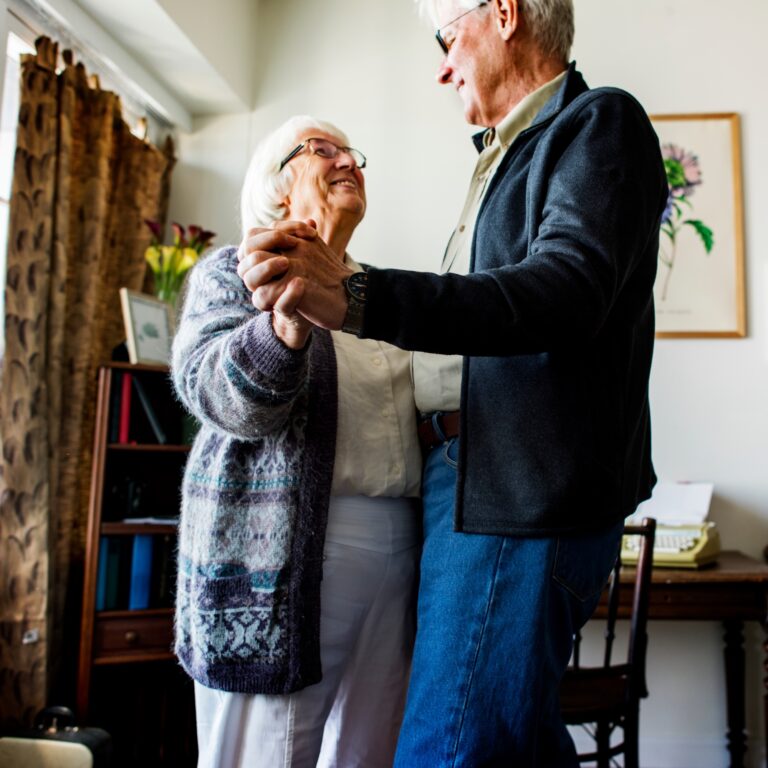
From first conversation to first morning: How care gets arranged
If a fall or a discharge from East Surrey Hospital in Redhill means help is needed fast, we can often have a carer in place within 48 to 72 hours. With time to plan, a standard placement takes one to two weeks, at a pace you set.
Call, message, or book a callback at a time that suits you. We listen, answer what we can, and explain what happens next.
Richard Barnett, our Registered Manager, or Nastasha, our Field Care Supervisor, comes to meet you and your loved one. They complete the risk assessment and build the care plan, noting details a form misses, such as parking, steps at the door, and the walk to the nearest shops.
We send profiles of carers who fit the plan, including drivers for homes outside the town centre, and you make the final call.
Your carer arrives on the agreed date, and Daisy, our Care Coordinator, stays in close contact while new routines settle.
A case manager reviews each placement, and senior management monitors the case managers, a second layer of checking many providers skip.
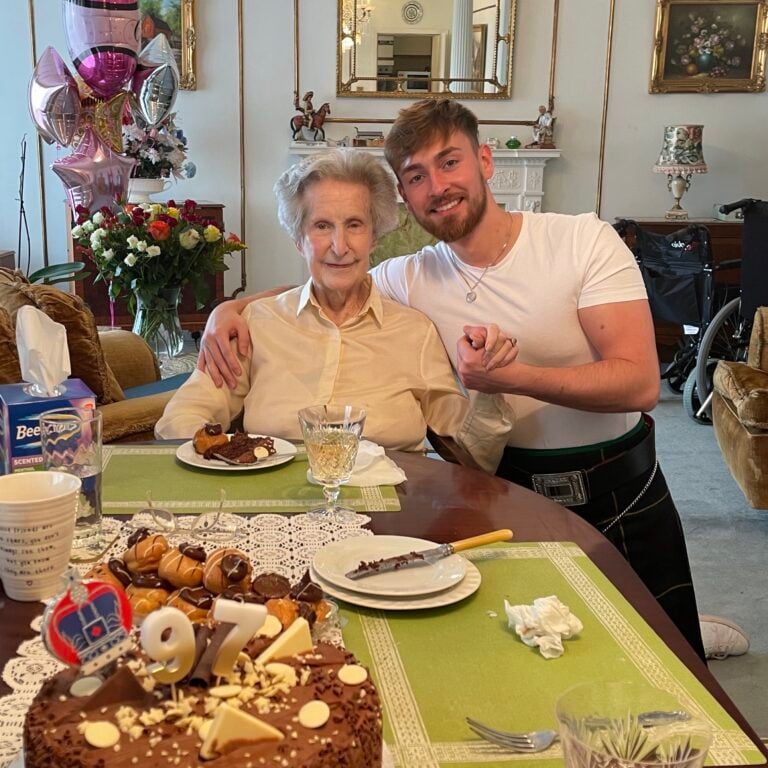
A single weekly rate, shaped by how nights are covered
Live-in care is priced as one amount per week, covering a dedicated carer based in the home and one-to-one support day and night. Rates start at £1,190 a week for one person and £1,476 for a couple sharing a home, with no hourly extras added on top.
The biggest factor in where your rate settles is what happens overnight.
- If nights are mostly settled, your carer sleeps in their own room and is on hand if called. This suits most families and keeps the rate closer to the starting price.
- If your loved one is up often, perhaps with later-stage dementia or after surgery, a carer stays awake and on duty through the night, and the weekly rate rises to reflect that.
Those are private rates. The funding routes below may reduce what your family pays, or cover it entirely.
Who pays for care? Routes Crawley families often overlook
Many families assume they will fund every week themselves, but that is not always the case. The right route depends on health needs, savings, and income, and more than one can apply at once.
- Complex or deteriorating health needs? Ask about NHS Continuing Healthcare, assessed locally by NHS Sussex. Where someone qualifies, it can fund the full package, and we are experienced in supporting NHS Continuing Healthcare (CHC) funded care packages.
- Limited savings? West Sussex County Council carries out a care needs assessment and a financial means test, then may contribute toward the weekly cost.
- Want to keep choosing your provider? Council support can be paid as Direct Payments, so the money comes to you and you decide who delivers the care.
- Over State Pension age and needing help day to day? Attendance Allowance is not means-tested. It won’t cover a live-in rate on its own, but it often goes unclaimed.
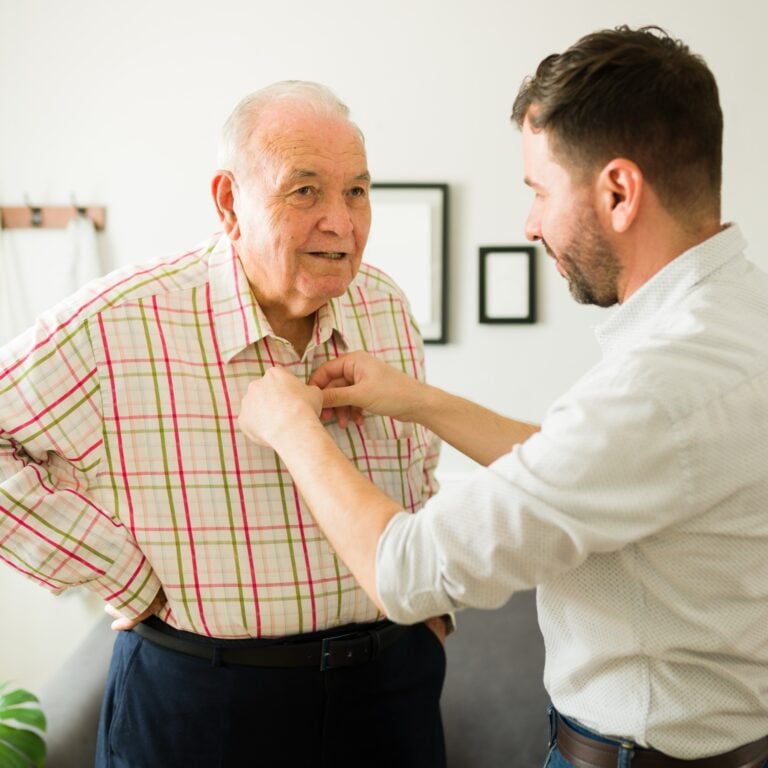
Local support for families around Crawley
Live-in care from Cheriton is available across the wider area, including:
What Crawley families want to know before a carer moves in
Can live-in care work in sheltered housing or a retirement flat in Crawley?
Often, yes, provided there is a spare bedroom and the scheme’s rules allow a live-in carer. We check this with you, and the scheme manager if needed, during the home visit.
Where will a live-in carer park if we live in a resident permit zone?
We look at parking during the home visit and talk through visitor permit options with you. Where parking is genuinely difficult, we can put forward carers who don’t need a car.
Can our carer drive mum to Crawley hospital or East Surrey for appointments?
Yes, if they hold a full licence and are named on your car insurance, or they can use their own vehicle. Clinic visits and GP appointments stop depending on lifts from family.
Can a live-in carer cover while we fly out of Gatwick for a break?
Yes. Short respite placements are common while a family carer travels or recovers, and they also work as a trial before committing to anything longer.
Had a worrying week? You don't need a plan to pick up the phone
Most families contact us straight after something has shifted: a hospital admission, an unsettling phone call, an empty fridge spotted during a Sunday visit.
Tell us what is happening and we will give you an honest view, even if that means suggesting another type of care instead of live-in support. No scripts, no hard sell.
Cheriton Homecare give me peace of mind and I know my mum’s needs are met completely. My mum has developed a real connection and even love of her main carer who she has come to trust and rely upon. They bring a security to my mum and become not just carers but also a social network.
Shirley S (Daughter of Client)
Cheriton Homecare helped Mother stay in her own home and keep her independence. She could be difficult as her dementia progressed but nothing was too much trouble for Cheriton, her carers were kind and compassionate. She loved seeing the manager and another member of staff who always made a great fuss of her.
Lynda S (Daughter of Client)
Everyone at Cheriton Homecare exudes calm, confident professionalism with compassion and patience. I am so grateful for their support in providing care for my mother-in-law and being able to respond to a desperate situation so quickly.
H R (Daughter-in-law of Client)
Cheriton Homecare are very, very good. They are absolutely wonderful.
A C (Client)
The two carers (a main one and a holiday relief carer) have fitted in well, seen what needs to be done and quietly got on with it in a cheerful and calm manner. They are looking after both my parents. Having the Cheriton carers there gives the family peace of mind knowing Mum and Dad are being looked after well while allowing them to stay in their own home.
Jan C (Daughter of Client)