




“People were truly respected and valued as individuals, and empowered as partners in their care.” — Care Quality Commission (CQC)


Staying at home, with someone there through the day
A carer moves in with your mum or dad and is there through the day, from getting up and washed in the morning to medication, meals and a lift to the surgery. They keep their own home and the village they know, rather than a room in a care home over in Burgess Hill or Lewes. For most older people here, that is what live-in care in Ditchling comes down to.
We are CQC-regulated and rated Outstanding in Caring, with an office eight miles away in Brighton. Ditchling is a short drive for us, so families here get the same visits and the same team as anyone closer to the city.
What families say once a carer has moved in
The support a live-in carer provides day to day
We shape care around the way your loved one already lives rather than a fixed schedule. That might mean protecting a morning walk, the weekly trip to the shops, or simply the routines that make a day at home in Ditchling feel like their own.
Personal care
Discreet, respectful help with washing, dressing, grooming and continence, given at your loved one’s own pace so dignity is never in question. Where it is needed, this extends to catheter care and other specialist support.
Companionship
A consistent presence through the day: someone to talk to, share a meal with, or sit with over a cup of tea. In a village where old friends have moved away or stopped driving, that matters more than most families expect.
Medication reminders
Gentle prompting to take the right medication at the right time, keeping to the schedule set by the GP and pharmacy so nothing is missed or doubled up. Your carer can also monitor vitals such as blood pressure or blood glucose where that has been asked for.
Alzheimer's disease & dementia care
Calm, patient support built around familiar routines and one consistent face. Richard Barnett spent 12 years caring for his grandfather through Alzheimer’s, and that experience shapes how we train and support every carer working with dementia.
Palliative care
Sensitive end-of-life support that lets your loved one stay at home, working alongside district nurses and the GP to keep them comfortable and settled.
Household chores and assistance
Light housekeeping, laundry, meal preparation and the weekly shop, so everyday tasks never become a burden. Your carer drives, which also covers trips to the surgery and hospital appointments without the family rearranging their week.
Why Ditchling families choose our team
Plenty of agencies will place a carer in a home. Families across Ditchling, Hassocks and the villages under the Downs tell us it is how closely we stay involved afterwards that sets us apart.
- You choose your carer. We match on personality and routine as much as care needs, and you have the final say on who moves in.
- A named team who know you. Richard, Daisy, Nastasha and the office team know every client and carer by name, and our Field Care Supervisor visits in person as needs change.
- Carers who drive. With no station in the village, appointments and shopping never depend on someone else being free.
- Joined up with local health services. We work alongside GPs and district nurses across East Sussex and Mid Sussex.
- More than 30 years of hands-on care. Our founder and Registered Manager, Richard Barnett, shapes how every carer is recruited, trained and supported.
- Rated by the people who use us. A 9.8 review score, and a CQC report that found people were respected and valued as individuals.

What a move out of the village takes with it
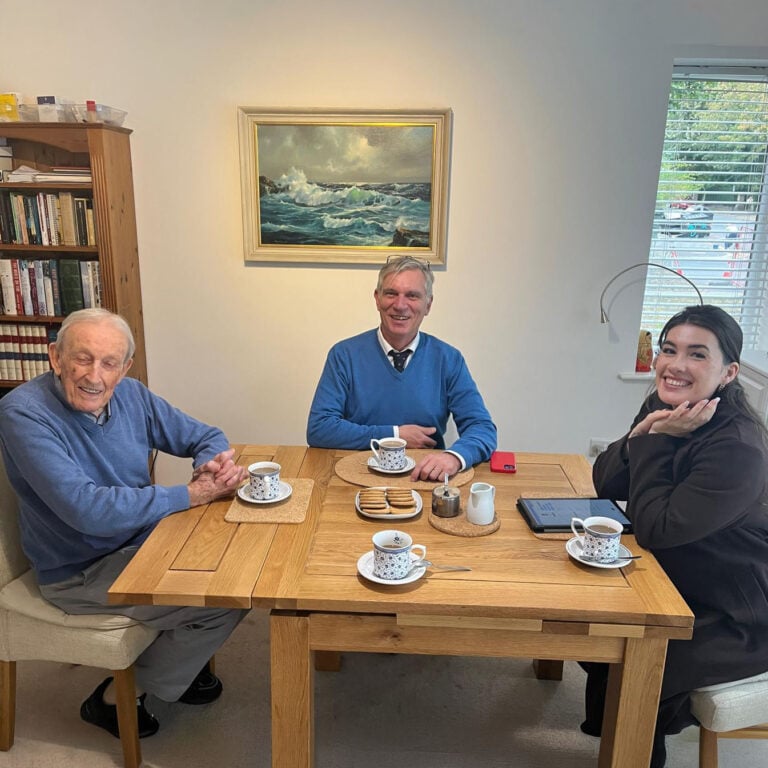
A care home place is rarely just a change of address. Families in Ditchling and out toward Hurstpierpoint usually find the move takes more with it than they had planned for.
- The house often has to be sold. Residential fees are commonly met by selling the family home. Live-in care is paid weekly instead, and it can work out up to 30% cheaper, which is worth weighing properly before anything is signed.
- Couples get separated. Two beds rarely come free in the same home at the same time. One carer can look after both of you, under the same roof, for a fraction more than caring for one.
- The surgery changes. Move far enough and your parent comes off the local practice list, so a new GP starts learning a long history from the beginning.
- Neighbours stop calling in. People who would walk round on a Tuesday will not drive to Burgess Hill or Lewes to do it, and plenty of them gave up driving years ago.
- The routine goes with the room. The dog, the garden, the chair by the window and the time everyone gets up are all decided by someone else once you move.
- A rota replaces a person. In a home your parent meets whoever is on shift. At home it is one carer who already knows how they take their tea.
Live-in, 24-hour or visiting care: which fits in a village like Ditchling
Live-in care and 24-hour care are the same thing. A carer lives in, supports your parent through the day, and takes a planned break rather than staying awake all night.
Visiting care is the lighter option, with a carer calling in at set times for specific tasks. It works well until the gaps between calls become the problem, which happens sooner in a village than a town. Ditchling is a round trip from anywhere a carer is based, and evening calls are the first to get tight.
How we arrange care, from first call to first morning
We talk through what is happening at home, what worries you most, and whether live-in care is genuinely the right answer for your family.
Our Field Care Supervisor comes to you. That visit covers the practical detail as well as the personal: where the carer will sleep, how the stairs work, what a normal day looks like, and which routines matter enough to protect.
We build it with you and your wider family, so it reflects how your mum or dad actually lives rather than a standard template.
We match someone to the plan and you meet them before anything is agreed. You decide whether they are right.
Your carer works to a schedule you have already approved. They take a planned break each day and time off each week, and we arrange cover so your loved one is never left without support.

What does live-in care cost in Ditchling?
Costs depend on the level of support needed and whether care is for one person or a couple. We are clear about pricing from the first conversation.
- Live-in care is charged weekly
- Prices start from £1,190 per week for one person
- Prices start from £1,476 per week for couples
- Fees cover full-time, one-to-one support from a live-in carer
Care can be self-funded or part-funded. Ditchling comes under East Sussex County Council, not West Sussex like nearby Burgess Hill, so a needs assessment goes through their adult social care team.
Attendance Allowance may also apply, and we are experienced in supporting NHS Continuing Healthcare (CHC) funded care packages. Ask us and we will talk you through it.
Not sure whether it is time to arrange care? Get in touch
Most families call us before they have decided anything. If you want to understand the options, compare live-in care against a home, or simply talk it through with someone who has done this for 30 years, we are glad to help.
What Ditchling families ask before care begins
Can a live-in carer drive around Ditchling and the nearby villages?
Yes, and we treat it as essential here. With no station in the village and limited buses, a carer who drives keeps appointments, shopping and visits to family in Lewes or Brighton straightforward rather than something the family has to organise.
How quickly can care start after a hospital stay?
Often within a few days. Discharge from the Princess Royal in Haywards Heath or the Royal Sussex in Brighton tends to come with little notice, so we prioritise these cases and can arrange an assessment visit quickly.
Does a live-in carer need a spare room in an older village cottage?
They need a room of their own to sleep and take breaks in, but it does not need to be large. Many Ditchling homes have narrow stairs and small second bedrooms, which is one reason our supervisor visits in person before we match anyone.
Can you support someone with dementia who still walks in the village?
Yes. Keeping familiar routines is usually better than restricting them, and a live-in carer can go along on the regular walk or trip to the shops so independence continues safely.
Do you work with GPs and district nurses covering Ditchling?
We do. Your carer coordinates with the surgery, district nurses and any visiting specialists, so nothing falls between services and the family is not left chasing updates.
Cheriton Homecare give me peace of mind and I know my mum’s needs are met completely. My mum has developed a real connection and even love of her main carer who she has come to trust and rely upon. They bring a security to my mum and become not just carers but also a social network.
Shirley S (Daughter of Client)
Cheriton Homecare helped Mother stay in her own home and keep her independence. She could be difficult as her dementia progressed but nothing was too much trouble for Cheriton, her carers were kind and compassionate. She loved seeing the manager and another member of staff who always made a great fuss of her.
Lynda S (Daughter of Client)
Everyone at Cheriton Homecare exudes calm, confident professionalism with compassion and patience. I am so grateful for their support in providing care for my mother-in-law and being able to respond to a desperate situation so quickly.
H R (Daughter-in-law of Client)
Cheriton Homecare are very, very good. They are absolutely wonderful.
A C (Client)
The two carers (a main one and a holiday relief carer) have fitted in well, seen what needs to be done and quietly got on with it in a cheerful and calm manner. They are looking after both my parents. Having the Cheriton carers there gives the family peace of mind knowing Mum and Dad are being looked after well while allowing them to stay in their own home.
Jan C (Daughter of Client)